Showing posts with label William Hopson. Show all posts

Saturday, April 11, 2026

Saturday Morning Western Pulp: Giant Western, June 1952


This is a pulp that I own and read recently. That’s my somewhat ragged copy in the scan. The covers aren’t in great shape, but the pages inside are really nice, just lightly tanned and very supple. I think the cover art is by Sam Cherry, but I’m not absolutely sure about that.

For a change, a story in a pulp billed as a novel actually is long enough to be considered one. “Nobody’s Neutral in Kansas” by Roe Richmond is about 40,000 words, I’m guessing, maybe even a little longer. It’s only sort of a Western, though, more of a historical yarn taking place in Kansas in the late 1850s and early 1860s and dealing with the violence there between pro-slavery and anti-slavery factions in the lead-up to the Civil War. Rupe Maitland and his father and brother have come from the east and settled on a farm in Kansas, and they just want to be left alone instead of taking sides in the conflict. But then tragedy occurs, hostilities increase, and inevitably Rupe and his family and friends are drawn into the bloody clashes. Roe Richmond knew how to keep a story moving along briskly and his action scenes are excellent. The biggest problem I have with this story is how unrelentingly bleak and grim it is. Of course, given the subject matter, it couldn’t exactly be a light-hearted romp. Still, it makes for heavy reading. But worthwhile, I’d say. (As a bibliographic aside, there’s a story of the same title by Richmond in the December 1951 issue of REAL WESTERN STORIES, but it’s much shorter. I haven’t read it, so I have no idea if Richmond expanded it for this version in GIANT WESTERN or if he just liked the title and they’re completely different stories.)

I don’t recall reading much by Cliff Walter in the past. He was a prolific contributor to the Western pulps. His story “Montana Man” in this issue is about a colorful old mountain man and his encounter with some settlers. It’s written in a folksy, supposedly humorous style that fell completely flat with me. Didn’t like it at all and wound up skimming through it.

I’ve found Robert L. Trimnell’s work to be a little inconsistent, but when he’s on his game, his stories are really, really good. His novelette in this issue has a pretty generic title, “Gun For Hire”, so I was a tad bit leery of it, but it didn’t take me long to realize that this is a terrific yarn. Tough Texas cowboy Mike Morrow trail bosses a herd to Montana, and once it’s been delivered, the crew blows off some well-earned steam in a night of drinking and debauchery. Unfortunately for Mike, when he wakes up the next morning, he has more than a hangover to contend with. He’s been framed for murder, and he winds up in the middle of a war between two rustlers, one of whom happens to be a beautiful young woman with a fondness for wearing red silk shirts with nothing under them. (Yeah, it’s a little risqué for a Western pulp story in 1952.) Mike is blackmailed into working for the young woman, but mostly he wants to sort things out and keep her from getting into too much trouble. Trimnell tells the story in hardboiled prose that reminded me of 1950s Gold Medal crime novels even more than the Western Gold Medals. He even provides a small but effective twist in the big showdown at the end. This is one of the best Western pulp stories I’ve read in a while.

Giff Cheshire is yet another author who’s hit-or-miss with me. “Drivers’ Pass” in this issue centers around the conflict between a railroad spur line being built into a mining town and the freight outfit that hauls goods with mules and wagons. It’s an interesting, well-written story that suffers from a really rushed ending, but other than that, I liked it.

Inconsistency seems to be an unofficial theme of this issue. I’ve read plenty of very good novels and stories by William Hopson, but I’ve read some that were pretty bad, too. His story “The Blue Mule” wraps up the fiction in this issue. Which was it going to be? This story is narrated by the eight-year-old son of a horse trader and starts out like it’s going to be a humorous, Doc Swap sort of story. Then it gets more serious with the introduction of a bully and a new county attorney from the east. The plot meanders around as if Hopson couldn’t decide what he wanted to write about and comes to an inconclusive ending. I hate to say it because I like Hopson’s work more often than not, but despite the narrator’s engaging voice, this just isn’t much of a story and isn’t very good.

I believe this is the first issue of GIANT WESTERN I’ve ever read, and it’s very much a mixed bag. The Trimnell story is fantastic, the Richmond novel is very good if depressing, the Cheshire story is okay, and the other two stories I didn’t like at all. Don’t go running to your shelves to look for this one, but if you do have a copy, I highly suggest you check out Trimnell’s yarn.

Saturday, September 21, 2024

Saturday Morning Western Pulp: 5 Western Novels Magazine, June 1953


This is a pulp that I own and read recently. My copy isn’t in the greatest shape, but that’s it in the scan, featuring a nice, evocative cover by Clarence Doore. You can feel the sweltering heat just looking at it, can’t you? One oddity of note is that it’s 5 WESTERN NOVELS MAGAZINE on the cover and the masthead on the title page, but FIVE WESTERN NOVELS MAGAZINE on the spine, the indicia, and the page headers. I’m going to make the arbitrary decision to use the version with the number when I refer to it in this post.

Calling this 5 WESTERN NOVELS MAGAZINE was something of an exaggeration, of course. The contents actually consist of three novellas, two novelettes, and a bonus short story. This title was, for the most part, a reprint pulp. There’s only one original story in this issue, and that’s the novella that leads things off, “Pistol Partners” by Lee Floren.

Now, Lee Floren has never been one of my favorite Western authors, but I’m coming to enjoy his work more over time. Also, this story features his longest-running series characters, Buckshot McKee and Tortilla Joe, a couple of drifting cowpokes who always manage to wind up in the middle of dangerous situations and sinister mysteries. I’ve read several novels starring Buck and Joe and enjoyed them. In “Pistol Partners”, they’ve come to New Mexico to answer a call for help from an old friend who is sick and has to go to the hospital. He wants Buck and Joe to take care of his pet cat for him.

That cat turns out to be a tame mountain lion named Madagascar Jones. The “hospital” in which the old friend is holed up is a boarding house run by a beautiful former madam, and all the boarders are beautiful saloon girls, one of whom is the unlikely bride of the old codger who summoned Buck and Joe. A ruthless cattle baron wants the old-timer’s land, several men have been killed, supposedly by the mountain lion Madagascar Jones, and Buck and Joe get shot at several times. This is the goofiest Lee Floren story I’ve read, rivaling W.C. Tuttle’s Sheriff Henry yarns in places. But it’s also full of action, well-plotted, and a lot of fun. There are a few examples of the slapdash writing common in Floren’s work—a guy rides up on horseback, for example, and in the very next paragraph he came up on foot and his horse is hidden in the brush—but if you can forgive that, and I can, “Pistol Partners” is pretty darned enjoyable.

William Hopson’s novelette “Trail Drive Boss” first appeared in the September 1945 issue of POPULAR WESTERN. As you can tell from the title, it’s a trail drive yarn in which a young cattleman butts heads with a crooked town boss who controls the only water in the area and uses exorbitant prices to steal herds. There’s also a beautiful woman involved, of course, and not everything is as it seems at first. Hopson was inconsistent but mostly very good, and this is an excellent tale that I enjoyed.

“Sixgun Sweepstakes”, a novella by Walker A. Tompkins, is a reprint from the June 1948 issue of POPULAR WESTERN. Tompkins is a long-time favorite of mine, and he doesn’t disappoint in this story about a town-taming lawman from Texas who’s the marshal of a town in Washington state. He throws in an intriguing angle about the friction between ranchers and wheat farmers but never really does anything with that plot element. Instead, this is a Fourth of July story with a rodeo and a big celebration highlighted by a stagecoach race. One of the marshal’s old enemies shows up in town before the shindig begins, and the romantic triangle between the two of them and the beautiful daughter of a state senator complicates matters before the villain’s true plan is revealed.

Tompkins is in good form in this story. There’s plenty of action, a fight on a train, the stagecoach race, and a few plot twists. It would have been better if the fight had been on top of the train (anybody who’s read much of my work knows I love those scenes), and a running shootout during the stagecoach race would have been nice. But that’s just me. “Sixgun Sweepstakes” is a solid yarn that would have made a good 1950s Western movie.

The novella “Dead Man’s Gold” by Larry A. Harris first appeared in the June 1948 issue of THRILLING WESTERN. A young man’s search for a fortune in gold supposedly hidden by his crazy uncle in the Devil’s River country of Texas puts him in conflict with a crooked banker and a corrupt lawman. The story moves right along and there’s plenty of action, but the writing is pretty flat and bland and the protagonist is so stupid that it stretches the reader’s willing suspension of disbelief too far. He does one dumb thing after another just to keep the plot going. Harris wrote hundreds of stories for the pulps but only a few novels, all of them featuring the Masked Rider. One of those was reprinted in paperback, Harris’s only book publication that I know of. I’ve read a few things by him in the past and found them okay at best. This one is a clear misfire.

The short story “Reunion at Amigo” is by veteran Western writer Allan K. Echols and originally appeared in the June 1948 issue of MASKED RIDER WESTERN. It’s about an old outlaw who has escaped from prison and is searching for his son. It’s pretty well-written overall, but the final twist is so obvious that it detracts quite a bit from the story’s appeal.

This issue wraps up with “The Necktie Party”, a novelette by Malcolm Wheeler-Nicholson from the July 1948 issue of EXCITING WESTERN. At first glance, this is a cavalry vs. the Apaches yarn, but as it turns out, there’s more to it than that as a young lieutenant tries to save a civilian scout from being lynched, prevent a new Indian war, and round up the bad guys, all at the same time. As always, Wheeler-Nicholson brings an undeniable air of authenticity to a story with a military background. This is an enjoyable tale weakened by an ending that’s not very dramatic and resolves things too easily.

As far as I remember, this is the first issue of 5 WESTERN NOVELS MAGAZINE, so I don’t have any basis to compare and say how it stacks up against the others in the series. Just as a Western pulp, though, I think it’s a little below average. I was surprised at how good the Floren story is, and there’s nothing wrong with the Hopson tale, but the entries by Tompkins, Wheeler-Nicholson, and Echols were good but could have been better, and the one by Harris just isn’t very good. I really like the cover by Clarence Doore, though. Overall, probably worth reading, but don’t rush to your shelves to see if you have a copy.

Saturday, December 31, 2022

The Wrap Up


There’s no point in denying that 2022 was a rotten year in many ways, but there’s also no point in dwelling on that. So let’s turn our attention to more pleasant endeavors, such as writing, reading, editing, and publishing.

To take those things in reverse order, for most of this year I was the editor of Rough Edges Press, the mystery/thriller/men’s adventure imprint of Wolfpack Publishing. It was a wonderful job, as I got to work with Mike Bray, Jake Bray, Patience Bramlett, and all the other great people at Wolfpack, in addition to all the authors involved. While there, I was privileged to edit some really excellent books, and I’m proud of what the line accomplished. However, I stepped down at the end of October because I discovered that I couldn’t both edit and write at the level I wanted to, and although I didn’t mind slowing down some on my page production (more about that in the next paragraph) I just wasn’t ready to stop writing full-time. There are still too many books in my head clamoring to get out.

As I mentioned a few posts back, 2022 was the first year since 2004 that I didn’t write at least a million words of fiction. So the streak ends at 17 years, and while I might have preferred an even number (yes, I am a little OCD), I’m absolutely fine with that. I wrote approximately 900,000 words this year. That’s plenty. I think 750,000 would be a good total for 2023. I wrote at that level for many years before I started hitting a million, and I think I can continue producing at that level for a while yet. My plan for next year is to keep up with my regular ghost-writing job (I’m committed to approximately half a million words there) and devote the rest of the wordage to a few books of my own. We’ll see.

On the reading front, it was a good year, not at all rotten. I read 138 books. Here are my top ten favorites, in the order in which I read them:

A GUIDE TO THE GOOD LIFE: THE ANCIENT ART OF STOIC JOY, William B. Irvine

GUNS OF THE DAMNED, Stone Cody (Thomas E. Mount)

IN THE PULP FICTION TRENCHES, Len Levinson

STAND UP AND DIE!: THE LOST THRILLERS OF MICKEY SPILLANE, Mickey Spillane

THE SPIDER: SCOURGE OF THE SCORPION, Will Murray

GHOST OF THE HARDY BOYS, Leslie McFarlane

FROM THE FILES OF . . . MIKE HAMMER, Mickey Spillane

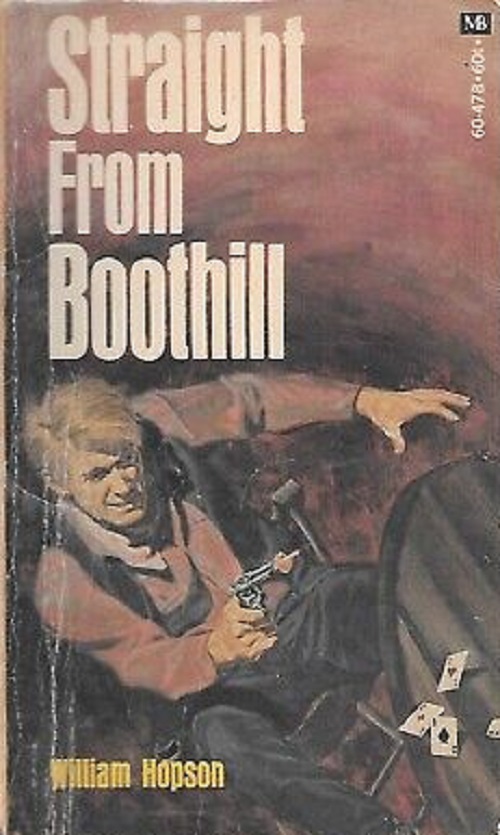
THE RANCH CAT (apa STRAIGHT FROM BOOT HILL), Willliam Hopson

JANE FURY, James Robert Daniels

CALICO, Lee Goldberg

I’m aware that’s a pretty odd mix. Two of them I edited (the Levinson memoir and the Spillane prose collection; the other Spillane book is a collection of the Mike Hammer comic strip I had nothing to do with). Two of them aren’t out yet because I read them in manuscript, JANE FURY and CALICO, but they’ll be out next year and you should remember those titles because they’re great. The pulp influence is there in GUNS OF THE DAMNED, the first novel in the Silver Trent series originally published in THE WESTERN RAIDER and STAR WESTERN, and in the Hopson novel because he got his start in the Western pulps, and in the new Spider novel by Will Murray since the Spider is one of the iconic pulp hero characters. My study of Stoic philosophy kind of petered out as the year went on, but the lessons I learned from it came in handy more than once and I still plan to get back to it.

There were at least two dozen other books right on the verge of making this list, including quite a few I edited, starting with Jamie Mason’s Father Barrett series and Ryan Fowler’s Father Tag Nolan series. Both of those feature priests/detectives and both are absolutely excellent, but beyond that, they couldn’t be more different. You should check them out if you haven’t already. Chuck Dixon’s Levon Cade series continued this year with several great entries. Brent Towns added another top-notch action/adventure series to his tireless output with TALON and also gave us some fine hardboiled private eye novels set in Australia. Nik Morton’s Leon Cazador books are fast-paced international thrillers with a great protagonist. Stephen Mertz’s latest Cody’s War novel demonstrates that he hasn’t lost a step and is still a legend in the action/adventure field. And these are just Rough Edges Press books. I also read some great pulp reprints from Altus Press/Steeger Books and several superb hardboiled/noir novels from Stark House/Black Gat Books/Staccato Crime. I swear, if you can’t find plenty of great books to read these days, you’re just not looking hard enough!

Finally, this blog suffered a bit in 2022 because I just didn’t have enough time to devote to it. As a result, there were fewer posts than any year since I started it in 2004—and since I started it in July, that was only half a year. I hope to post more in 2023, including more book reviews, the return of movie reviews, and maybe an occasional post about what else is going on in my life, although generally, that stuff is pretty boring. My thanks to all of you reading this, whether you’ve been a regular reader since 2004 or just found the blog. Like the WesternPulps email group (which will celebrate its 24th anniversary this spring), I intend to keep this going for a good long while yet.

Wednesday, November 02, 2022

The Ranch Cat (Straight from Boothill) - William Hopson


I’ll admit, I bought this book partially because of the great Mitchell Hooks wrap-around cover, which you can see below in an image found on the Internet. The scan at the top of this post is of my copy. I also bought it partially because I’ve found William Hopson to be a good to very good and occasionally excellent Western author, and because it’s a Lion Book, a short-lived but influential paperback house that published a lot of great authors in the early Fifties. I’m always glad to add another Lion Book to my collection.


THE RANCH CAT was published originally in hardback under the title STRAIGHT FROM BOOTHILL by lending library publisher Phoenix Press in 1947. This retitled reprint from Lion Books came out in 1951. Later, the novel was reprinted in paperback under its original title by Avon (with Steve Holland on the cover!), Macfadden-Bartell, and Leisure Books, at least. There was also a large print edition from Chivers Press. There may be other paperback editions I’m not aware of. But with those bibliographic details out of the way, you may be asking, is it any good?

Oh, yes. This is the best book by William Hopson that I’ve read so far, and one of the best books I’ve read this year, to boot.


Rather than the lurid tale promised by the Hooks cover, the title, and the copy on THE RANCH CAT, or the traditional shoot-em-up indicated by the original title and the other reprint covers, this novel is a low-key, somewhat realistic portrait of ranch life in Montana in the 1890s. It covers several years in time (not counting a modern-day framing sequence) and is narrated by Jim Devers, the son of the ranch owner who, in the course of the book, goes from a gangling teenage boy to a grown man who runs the spread. His sister is the title character in the Lion reprint, a flirtatious beauty who stirs up a great deal of trouble among the crew.


There are some fistfights and a couple of shootings in this book, along with a crooked gambler and a hanging, but none of it is presented in any sort of melodramatic fashion. When violence does break out, it’s sudden and shocking and tragic. A lot of the book is a slow, deliberate ratcheting up of tension among the characters.

And then there’s Quong, a mysterious Chinese cowboy with some secrets in his past. He’s a great character who has a big part to play in the unfolding of life on the Devers ranch. It takes a skilled author to pull off such an oddball plot element without it seeming goofy, and Hopson does a great job of it.


THE RANCH CAT/STRAIGHT FROM BOOTHILL is a hard book to describe but a joy to read. Fairly inexpensive copies of the various editions under the original title are available on Amazon. If you want the Lion edition, it’ll cost you a little more, but still not all that much for a great, forgotten Western novel. I think I’ll remember this one for a long time.

William Hopson


Saturday, June 26, 2021

Saturday Morning Western Pulp: Pioneer Western, December 1950


This is the first and apparently only issue of this Western pulp published by Avon and edited by Donald A. Wollheim. There was an earlier PIONEER WESTERN, a few issues of which were published by Popular Publications in the Thirties, but the two magazines aren't connected other than by title. I don't know why this version of PIONEER WESTERN lasted only one issue, but it couldn't have been because of the authors: William Hopson, Dean Owen, Will C. Brown (C.S. Boyles, the other author from Cross Plains, Texas), Roe Richmond, C. William Harrison, Walt Sheldon, and Robert Moore Williams. That's a really solid line-up of pulpsters. I like the cover, too. I thought at first the art might be by Norman Saunders, but this issue isn't listed on his website. Whoever painted it, I like it. There's also a comic strip story inside with art by the great Joe Maneely.

Saturday, January 30, 2021

Saturday Morning Western Pulp: Giant Western, April 1952


This cover is more proof, as if we needed it, that no card game ever ended peacefully in the Old West. Sam Cherry did most of the covers for GIANT WESTERN and this one is probably his work, too, but I don't know that for sure. There are some good authors inside this issue: Wayne D. Overholser, Philip Ketchum, and William Hopson all have stories, along with Russ Winterbotham and William Ratigan, who wrote a series for ADVENTURE about a character named Captain McCargo. I've never read any of those, but they sound good. 

Saturday, December 12, 2020

Saturday Morning Western Pulp: Popular Western, August 1948


I think that's the first time I've seen anybody use a shovel for cover during a gunfight. Doesn't seem to be like it would be all that effective, although it seems to be doing the job in this cover by Sam Cherry. This issue of POPULAR WESTERN has a strong group of authors inside, including William Hopson, Malcolm Wheeler-Nicholson, Louis L'Amour, Tom Gunn (probably Syl MacDowell), Ben Frank, Harold F. Cruickshank, Alfred L. Garry, and house-name Jackson Cole. I'm not that fond of some of those writers, but their work was popular and they sold plenty of it.

Saturday, November 14, 2020

Saturday Morning Western Pulp: Lariat Story Magazine, January 1946


This issue of LARIAT STORY MAGAZINE came up in the comments on last Sunday's pulp post, as did the one I'll be posting tomorrow. This cover is by Fiction House stalwart Allen Anderson, although I don't think it's a typical Anderson cover. Still a pretty good one, though. Inside are stories by William Hopson, Giles A. Lutz, Lee E. Wells, Curtis Bishop, R.S. Lerch, and lesser-known authors John C. Ropke, Harold R. Stoakes, and Walter Galli.

Saturday, June 02, 2018

Saturday Morning Western Pulp: Two Western-Action Books, Spring 1952


Two pretty good covers and two pretty good authors in William Hopson and William Heuman. I think it's a pretty good bet that this is a pretty good issue. I'd read it, that's for sure.

Friday, November 10, 2017

Forgotten Books: The Guns of MacCameron - William Hopson


THE GUNS OF MacCAMERON starts off as a vengeance quest book. Former Confederate cavalry officer Tyler MacCameron has been roaming the West for eight years, hunting down and killing the men responsible for burning his plantation and murdering his wife and infant son after the war. He’s caught up and dealt with all but two members of the gang when he rides into the small Wyoming settlement where both of his targets have started new, apparently respectable lives.

From that point, however, the book doesn’t play out as you might expect, as it becomes a range war yarn instead, involving cattlemen and sheepherders. In this case, however, the two sides aren’t enemies. The big cattle and sheep ranchers team up to try to eliminate all the smaller outfits, and I’m sure you can guess which side MacCameron winds up on.

William Hopson started out in the Western pulps and went on to a long and successful career writing Western novels for hardback and paperback publishers. He wrote a few mysteries, as well, but I’ve never read any of them. I’ve read quite a few of his Westerns, though, and found his work to be inconsistent but mostly good, bordering on excellent, although he was capable of turning out a stinker now and then, especially in his later years.

THE GUNS OF MacCAMERON, published in hardback by Avalon in 1969 and reprinted in paperback by Macfadden-Bartell in 1971 (the edition I read) is one of Hopson’s good novels. The hero and the main villain are pretty one-dimensional, but all the other characters are a nice blend of good and bad qualities, and some of them turn out different than you might think they would. Hopson had an odd, even awkward style in places, but he was very good at action scenes and there are plenty in this book. There’s a great battle between a man and a grizzly bear that’s not as one-sided as it sounds. All in all, the book moves along nicely and comes to a satisfying conclusion.

THE GUNS OF MacCAMERON isn’t a great Western novel, by any means, but it is a good solid piece of entertainment for fans of the genre. If you like Westerns and come across a copy, it’s well worth reading. That’s true of most of William Hopson’s books.

Saturday, August 13, 2016

Saturday Morning Western Pulp: Top Western Fiction Annual, 1954


You have to look close to see it, but there's a bullet going through this cowboy's hat, so this qualifies as an Injury to a Hat cover. Who's the artist? I don't know. The art reminds me a little of both H.W. Scott and A. Leslie Ross and might easily be neither of them. TOP WESTERN FICTION ANNUAL was a reprint pulp, as you might guess, and the 1954 edition has some fine authors in it: Allan R. Bosworth, William Hopson, J. Edward Leithead, Leslie Ernenwein, Larry A. Harris, W.F. Bragg, and the ubiquitous house-name Sam Brant. The stories come from a variety of Thrilling Group Western pulps published in the Thirties and Forties. Maybe not the very top Western fiction . . . but PRETTY DARNED GOOD WESTERN FICTION ANNUAL probably wouldn't have sold as well.

Saturday, February 27, 2016

Saturday Morning Western Pulp: Mammoth Western, October 1946


Injury to a hat alert! At least, I assume that's a bullet hole in the brim of that cowboy's hat. Something caused it to fly off his head, anyway. And I'm not sure why he's shooting straight up into the air with one of his guns. Since we can't ask artist Robert Gibson Jones, I guess we'll never know.

Inside this issue of MAMMOTH WESTERN is a novella by William Hopson, an inconsistent author but usually good to very good. The rest of the fiction is provided by Ziff-Davis regulars Chester S. Geier, H.B. Hickey, and Berkley Livingston. I don't know where S.M. Tenneshaw and Alexander Blade were that month, probably busy over in AMAZING STORIES and FANTASTIC ADVENTURES.

Monday, October 21, 2013

Ten More Western Authors I Like

Here are ten more Western authors whose work I really enjoy, although, as usual, some of them can be inconsistent.

Peter Dawson – In real life Peter Dawson was Jonathan Glidden, brother of Frederick Glidden, who wrote as Luke Short. I believe Jon began writing after Fred did, but both were prolific contributors to the pulps during the Thirties. If I recall correctly (and someone please correct me if I don't), Jon Glidden won some sort of contest with his novel THE CRIMSON HORSESHOE, which was serialized in WESTERN STORY and then published in hardback by Dodd, Mead, starting him on a very successful career as a novelist. He continued to write for the pulps through the Forties but concentrated on novels after that. The paperback reprints from Bantam Books were so popular that after Glidden's death Bantam hired another author to write paperback originals under the Dawson name. I've never read any of them, but I've been told they're not nearly as good as the ones Glidden wrote. I first discovered Peter Dawson's work by reading the novel TRAIL BOSS when I was in the seventh grade, and I've read many of his books since then. Several volumes of his pulp work were published in paperback by Leisure in recent years.

Peter Field – This is a bit of a cheat, since "Peter Field" is a house-name and a number of different authors used it. But when I was a kid checking out books from the bookmobile every week, I went through every Peter Field western they had, which was quite a few. The books were published in hardback, first by William Morrow (more on that in a minute) and then by Jefferson House. All the ones I read back then were in the Powder Valley series and featured the adventures of Pat Stevens, a horse rancher in Colorado, and his sidekicks: short, roly-poly Sam and tall, gaunt, eyepatch-wearing Ezra. I had no clue then that Peter Field wasn't the author's real name, but I know now that all of the novels from the Fifties and Sixties were written by Lucien W. Emerson. Later on I discovered the earlier books in the series, written at first by William Thayer Hobson, the president of William Morrow and the husband of bestselling novelist Laura Z. Hobson, and then later by various hands, most notably Davis Dresser, a.k.a. Brett Halliday his own self. Dresser was the primary author of the series during the Forties, when his Mike Shayne series was also going strong. In these earlier books, Pat Stevens was still a rancher, but he was also the sheriff, and he had a wife, too, who had disappeared by the time I started reading the books in the early Sixties. In addition to all this, the Peter Field name was also used on several stand-alone Western novels, all of which were written, I believe, by Harry Sinclair Drago.

Peter Germano – Best known under his pseudonym Barry Cord, Germano wrote under that name and several others. His stories began appearing in the Western pulps in the mid-Thirties, and by the late Forties he was writing novels under the Barry Cord name. During the Fifties he was one of the main authors of Jim Hatfield novels for the pulp TEXAS RANGERS under the house-name Jackson Cole, and some of his entries are among the best in the entire series. Later on he became a prolific author of paperbacks, turning out many novels for the Ace Double line as well as other publishers. Some of these novels were rewritten and expanded version of stories he originally wrote as Jim Hatfield novels. As is the case with most of the Western authors I like, his style was terse and hardboiled, and his stories are well-plotted with plenty of action.

William Hopson – Another author who started in the pulps and then became a prolific paperbacker, Hopson has an odd style that takes a little getting used to, but once a reader is accustomed to it, his prose is very effective. His work is inconsistent. His Masked Rider "Guns of the Clan" is almost unreadable, while his later stand-alone novel GUNFIGHTER'S PAY is an excellent yarn with one of the best action climaxes I've found in a Western. If you try something by him and don't like it, it's probably worthwhile to try something else.

Peter McCurtin – One of the great mysteries in Western publishing, Peter McCurtin was long thought to be a house-name, but it appears there really was a writer and editor by that name who worked primarily for Belmont/Tower/Leisure. His best work is probably the Carmody series, published under his own name. These are tough, gritty action Westerns and very well-written. All of them except the first book in the series are in first person, something of a rarity in Westerns. Later, McCurtin wrote another series under the name Gene Curry about a character named Saddler, who is basically Carmody again. He also wrote some of the Lassiter novels under the house-name Jack Slade, including THE MAN FROM DEL RIO, the first Adult Western I ever read and a real eye-opener at the time. McCurtin continued the Sundance series after Ben Haas's death, and while I don't like his entries as much as the earlier books, they're solid Westerns. He also wrote men's adventure novels and a couple of hardboiled private eye novels that are well-regarded by some fans of the genre. I haven't gotten around to reading them yet, but I will one of these days.

Leonard F. Meares – I first encountered the work of Len Meares in the Bantam paperbacks published under the name Marshall McCoy. These were thin Westerns in two series: Larry and Streak, and Nevada Jim. I enjoyed these books and read them all. Checking the copyright pages, as I did even then, I figured out that these were reprints of books originally published in Australia. I never dreamed, though, that many years later I would be good friends by correspondence with the author, whose name was really Marshall McCoy but rather Leonard F. Meares. Beginning in the mid-Fifties, he wrote more than 800 novels, most of them Westerns and primarily under the pseudonym Marshall Grover, although he used other pen-names as well. I read dozens of them and always enjoyed them. Fast-moving, well-plotted, with very appealing characters. About half of his output consisted of the Larry and Stretch series (the characters' names were changed slightly in the American editions, for some reason), a couple of drifting Texans with a habit of getting into trouble. Toward the end of his life, Len's Australian publishers cancelled the series, but since they had a contract for foreign rights in the Scandinavian countries, they insisted that he continue writing the books so that they could be translated. I know it bothered him to write these books knowing they would never appear in English. But still he carried on, still with as much enthusiasm as he could muster for the work. He was a great friend, and to this day I miss hearing from him.

D.B. Newton – Another veteran of the pulps, D.B. Newton wrote some of the Jim Hatfield novels in TEXAS RANGERS, as well as entries in the Rio Kid and Masked Rider series. Branching out into paperback novels, he wrote RANGE BOSS, the book regarded as the first modern-day mass-market paperback original. For Berkley he wrote a series about Jim Bannister, unjustly accused of being an outlaw and forced to go on the dodge. As Dwight Bennett, he wrote a number of excellent stand-alone Western novels for Doubleday's Double D line. Finally, he created and wrote several novels in the Stagecoach Station series for Lyle Kenyon Engel's Book Creations Inc. These were published by Bantam under the house-name Hank Mitchum. Engel intended for Newton to write all the books in the series, but with them coming out every two months, he couldn't keep up that pace and BCI enlisted other authors to contribute novels as Hank Mitchum, eventually including me. I've always taken great pleasure in the fact that I wrote shared a house-name with someone who wrote Jim Hatfield novels, since TEXAS RANGERS is one of my all-time favorite pulps. Newton's novels are good solid Westerns, nothing flashy about them. Maybe not quite as hardboiled as some of my other favorites, but still excellent reading.

Dudley Dean McGaughey – Best known for his books under the names Dean Owen and Dudley Dean, McGaughey also wrote under house-names and other pseudonyms, including, you guessed it, some Jim Hatfield novels. His Hatfield novel "White Gold of Texas", one of the stories reprinted in paperback by Popular Library, is one of the best in the series. McGaughey also wrote mysteries and soft-core erotic novels and movie novelizations and TV tie-in novels. Tough prose and good plots are to be found in all his work. He was the sort of versatile, top-notch paperback author I've always enjoyed and admired.

Walker A. Tompkins – Another veteran of TEXAS RANGERS and the Jim Hatfield series, Tompkins wrote many of those novels as Jackson Cole throughout the Forties and Fifties, and they're all good. He wrote lead novels for the other three Western hero pulps published by Ned Pines, RIO KID WESTERN, MASKED RIDER WESTERN, and RANGE RIDERS WESTERN, along with scores of stand-alone stories for nearly every Western pulp in existence. He was a stalwart in WILD WEST WEEKLY during the Thirties, writing under several different names, and some of that work comes in for some criticism in Bill Pronzini's SIX-GUN IN CHEEK. Admittedly, a lot of Tompkins' early stories and novels are pretty over-the-top. But by the late Forties he had matured into the author of a number of fine stand-alone Western novels, some of them expanded from stories that originally appeared in the pulps.

Harry Whittington – Justly famous for his hardboiled mystery and suspense novels, Harry Whittington's Westerns are just as dark and lean as his crime yarns. His novel TROUBLE RIDES TALL was adapted into the TV series LAWMAN starring John Russell and Peter Brown. SADDLE THE STORM, the story of a frontier town celebrating the Fourth of July, is probably his best Western, as the festivities bring one dark secret after another into the open. Any of Whittington's Westerns, whether from Gold Medal, Ace, or Ballantine, is well worth reading.


I see this installment is even more long-winded than the previous one. The usual caveats apply. If you try books by all these authors, there'll be some you don't like. But I'll bet there'll be some you will.