Showing posts with label Monday Memories. Show all posts

Monday, February 17, 2025

Monday Memories: My Home Town Revisited


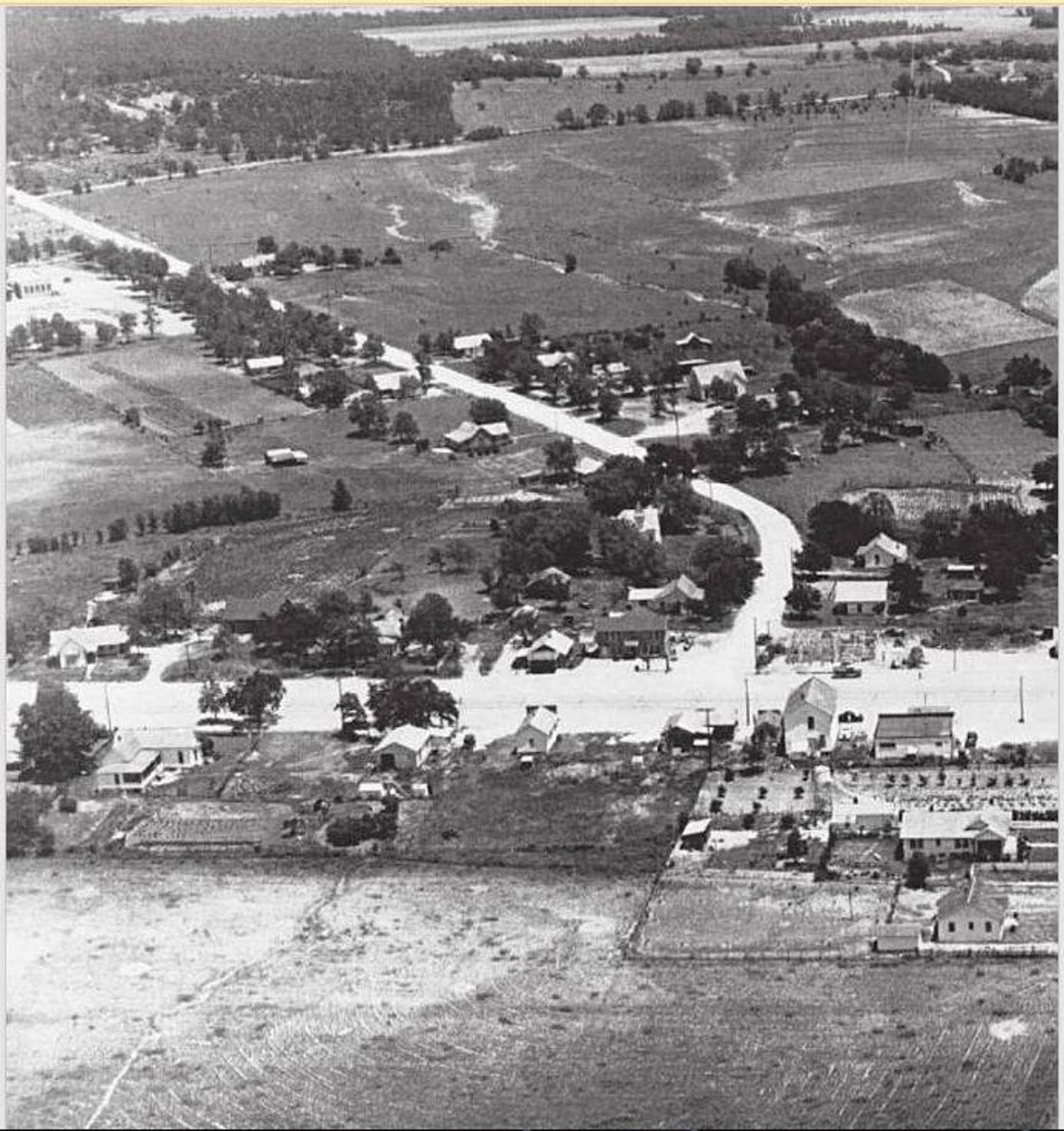
A number of years ago, I did a series of blog posts called Monday Memories in which I waxed nostalgic about all sorts of things from my childhood growing up in a small Texas town called Azle. The first one featured an aerial photo of Azle taken in 1938. A friend of mine named Jim Magnuson recently read those blog posts and was inspired to start a series of drone videos on Facebook called "Azle, Then and Now". The first one is an updated version of the photo I published and can be seen here. Jim plans to do more of these and I'm really looking forward to seeing what he comes up with.

And maybe I'll do some more Monday Memories posts, if I can think of things to write about. I'm not getting any younger, you know.

Monday, January 07, 2019

Monday Memories: Another One Rides the Bus


Starting in first grade and continuing through most of my public school career, I rode the bus to and from school nearly every day. It came along the service road next to the highway and stopped at our street around eight o’clock in the morning. I always tried to get down the street to the corner a few minutes before that so I wouldn’t miss the bus. The few times that happened, I had to trudge back up the hill to our house and my mother had to take me to school, much to her annoyance.

The people who lived in one of the houses on the corner had a boat, and they kept it in a shed that was fairly close to the road. The shed had no front, but it had sides, a back, and a roof, so when it was raining, or very cold, the kids waiting for the bus crowded into the shed for protection from the elements. We had no trouble hearing the bus’s rumbling engine as it came along the service road toward our street.

Most of the time we waited outside, though, and of course, being kids, we came up with games to play. Since there was a ditch on both sides of the street, we used the one alongside the boat shed for a game called “Quicksand Monster”. One kid would get in the ditch and serve as the Quicksand Monster. The others had to jump back and forth over the ditch while the Quicksand Monster tried to catch one of them and haul him or her in. When that happened, the kid who got caught became the Quicksand Monster, and so the game continued. I have no idea who gave it that name, but I’m pretty sure it wasn’t me. I imagine other kids in other places played variations of the same game, but I never heard or read any other references to calling it Quicksand Monster.

The bus had already made three stops before it picked us up. After we got on, it continued on up the service road, made one more stop at the corner of another street, then turned, crossed over the highway, and headed back toward town and the various schools. Some years, the bus I rode also made several stops at a neighborhood on the other side of the highway to pick up the kids who lived there, but when that happened we were really crowded in and really had too many kids on there. I don’t recall that ever being a permanent situation.

Most of the time, after making the one stop beyond our street, the bus returned to the high school first to let off those kids, then cut through some back streets and a residential area to get to the elementary school I attended. Along the way we passed a big concrete watering trough on the corner of some land where people kept cattle. I first noticed that watering trough in the fall of 1959, when I was in first grade. I drive by there occasionally now, and I always look over at it. The watering trough is still there—or at least it was the last time I went by. That corner hasn’t changed in the almost sixty years since then.

Anyway, as I got older, I began riding on past the elementary school to the junior high, which was the last stop. The bus barn was located there. And finally, when I reached high school, I got off at the first stop every morning.

The routine in the afternoon was much the same, except that route started at the elementary school, went by the junior high, and then the high school last before heading out the highway to the area where I lived. My street was the fourth stop. The bus usually got there about five minutes until four o’clock in the afternoon, which meant I could hurry up the street and get in the front door in time to watch MIGHTY MOUSE or HUCKLEBERRY HOUND or THE ADVENTURES OF SUPERMAN, whichever was running in that time slot that year. Much later, I made sure I got home in time to watch reruns of THE MAN FROM U.N.C.L.E., which one of the local stations showed every weekday.

I remember missing the bus in the afternoon only one time, and I couldn’t tell you the reason why. But I was in high school, I know that (the old campus, the one’s that now a junior high). It was about a mile and a half from my house, so I decided to walk home instead of trying to call my mother and ask her to come get me. It wasn’t a problem; I was young, and it was only a mile and a half. And I remember enjoying that walk quite a bit. You see a lot of details when you’re walking that you never notice when you’re riding in a bus. I got home about half an hour later than usual, so I probably missed something on TV, but I don’t think I cared. However, that was the only time I ever walked home, so I didn’t enjoy it so much that I started doing it on a regular basis.

Over the years I rode various buses: 5, 15, and 33 are the only numbers I recall. But they were all virtually identical, so it didn’t really matter. They weren’t air-conditioned, of course, but we would let the windows down on hot days. I had a few friends, some from my street and a few from the street where the bus stopped just before us. I don’t recall ever being picked on, although that certainly happened to some kids. Being a fat little nerd, I had learned at a young age to keep my head down and be as invisible as possible in such situations.

That’s the way my bus riding went until the first day of my junior year of high school. The morning ride was normal, but that afternoon when I got on the bus to go home, it followed such a long, circuitous route that it was 5:30 before I walked in the door. Being accustomed to getting home by four o’clock, this delay was flatly unacceptable. I needed that hour and a half for reading comic books and paperbacks or watching TV or playing football, baseball, or basketball. Since I had my driver’s license by then, I asked my dad if I could have a car and start driving to school. He knew a guy who had a used car lot (as I’ve mentioned before, no matter what you needed, my dad Knew A Guy) and within days, I had a car. It was an olive-drab Oldsmobile, a ’66 model, I think, ugly as sin and one step above a junker, to boot. But it ran—most of the time—and I no longer had to ride the bus. That led, the next school year when I was a senior, to the one, count it, one semester of public school that I truly enjoyed, the second semester of my senior year when I came in late and left early.

I wasn’t fond of riding the bus. I wouldn’t say that I absolutely hated it. Most days it was just part of the overall experience of going to school, not really good or bad, just something that had to be gotten through. But by the time my kids were school age, Livia and I were both working at home as full-time writers, so we made our own schedules and one of us was always able to take the girls to school and pick them up. They rode buses for field trips and other extracurricular activities, of course, but never to or from school. That was fine with me, because I always enjoyed those trips with them. They may have missed a few experiences by not riding the bus, but on the other hand, we listened to the radio and we waved at the donkey in the field where we always turned and we went by the house where all the weiner dogs lived and hoped they would be outside so we could see them running around and playing. I hope those moments were worth something to the girls. They certainly were to me. More than any bus ride I ever took.

Monday, December 24, 2018

Monday Memories: A Christmas Memory


Remember what I said a couple of days ago about the kid on that RANCH ROMANCES cover reminding me of me? Well, now you can see why. Yes, that's me, wearing my Bat Masterson outfit. I know this picture was taken on Christmas Day, and I'm pretty sure the year was 1959, which would make me six years old. I'm also certain it was taken in the living room of my Aunt Annie's house in Blanket, Texas. I'd gotten the outfit as a Christmas present that morning and insisted on wearing it when we went to Blanket. I was a big fan of the TV show starring Gene Barry. I also had a Kit Carson outfit and numerous toy guns based on guns used in various Western TV shows. So it's not the least bit surprising that I turned out like I did.

Monday, December 10, 2018

Monday Memories: Radio


I was too young for the Golden Age of radio drama (although I’ve heard plenty of great Old Time Radio as an adult), but I was right on time for the Golden Age of Top 40 radio. I don’t know exactly when FM radio became popular, mostly in the late Sixties and early Seventies, I think, but in the late Fifties and early Sixties, we were all about AM radio, baby. That was the only band on our car radios and the little transistor radios we carried around in our hip pockets. The sound quality may not have been great, but we listened to them all the time anyway.

My favorite station was KXOL, 1360 on your radio dial in Fort Worth. There were two popular Top 40 stations in Fort Worth, the other one being KFJZ, 1270 AM. You had your KXOL guys, and you had your KFJZ guys. I was a KXOL guy, through and through. There was also a Top 40 station in Dallas, KLIF, but to be honest, I didn’t know anybody who listened to it. Maybe their signal didn’t get over into our part of the country very well.

KXOL had some history to it. George Carlin and Jack Burns worked there as DJs. Bob Schieffer was part of the news department. A couple of national number one hit songs, “Hey Baby” by Bruce Channel and “Hey, Paula” by Paul & Paula, were recorded at a nearby sound studio and had their debuts on KXOL. Paul & Paul were actually named Ray Hildebrand and Jill Jackson and became Christian music artists later on. I saw them perform live at the church I attended, and I’m pretty sure they still sang “Hey, Paula”.

I didn’t always get to listen to what I wanted, though. My dad was a TV repairman, and sometimes I’d go with him when he made his service calls. He listened to a country music station, KBOX (I don’t recall the frequency), and of course the announcers pronounced it just as you’d expect, kaybox, except when doing official station IDs. I didn’t really mind, though. I’ve always been able to listen to just about any kind of music.

During the summers, I spent a lot of time at my aunt’s house in Blanket, Texas, and while I was there I listened to KBWD out of Brownwood. It still exists, but it’s a country station now instead of Top 40 like it was in those days. I remember sitting on the porch of her house with a transistor playing “Light My Fire” or “If You’re Going to San Francisco” while I was reading paperbacks or going through my aunt’s old copies of THE SATURDAY EVENING POST and reading all the fiction.

Another summer, I pretty much lived at my sister’s house, and that was the year I started listening to “Music ‘Til Dawn”, the all-night Easy Listening/Adult Contemporary program I did a blog post about several years ago. Like I said, I enjoyed many different kinds of music and loved what I heard on that program on KRLD out of Dallas.

One thing I liked to do during that era was to turn down the sound late at night, press the radio to my ear, and slowly go through the dial, trying to see how many stations I could hear, and from how far away. When I caught the signal skip just right at night, I was able to hear St. Louis and Chicago pretty regularly, and of course XERF came blasting in from across the border in Mexico. It was all English-language programming, mostly religious, but it didn’t have to abide by FCC regulations.

Along about the same time, I became a fan of WFAA, a Dallas station that was Adult Contemporary during the day and talk radio at night. It was a sister station of WBAP, a country station in Fort Worth, and they had an odd frequency-sharing arrangement. Part of the day, WFAA was at 570 and WBAP was at 820. Then, after a certain number of hours, they would switch frequencies. I never knew why they did this. I’m sure there was some sort of business or regulatory reason. But it made keeping up with them a little difficult. Eventually, WFAA settled into the 570 frequency, and WBAP took over the 820 frequency permanently, where it still is, I believe. WFAA radio is long gone. But I was a regular listener, especially during college, when I seldom missed the late night talk show hosted by Ed Busch.

Radio lost a lot of its charm once I got older and the FM band dominated the industry, although I was a fan of KOAI (“the Oasis”), a smooth jazz station that was in Dallas for a while. And when our daughters were young and I was driving them to school and various activities during the Nineties, I listened to a lot of Top 40 again, only it was their Top 40, not mine. I liked quite a few of the songs, though. These days, we have satellite radio in the car, and I listen to smooth jazz, New Age, classic rock, metal, whatever I’m in the mood for at the moment. Music doesn’t play nearly as big a part in my life as it once did, but still, when the right song comes on the radio, I turn it up. And now and then . . . if I’m by myself . . . and if I hear the opening chords of Three Dog Night’s “Joy to the World” . . . yeah, that’s me bellowing out “Jeremiah was a bullfrog!” at the top of his lungs like an idiot. A happy idiot.

Monday, November 26, 2018

Monday Memories: The Ski Jump


You can get a pretty good idea how long somebody has been around Azle by how they react if you mention the Ski Jump. If they have no idea what you’re talking about, they probably haven’t been in town long, since everybody hears about the Ski Jump sooner or later. But only those of us who have been around here since the early Sixties know why it’s called that.

First of all, despite the fact that the town is just west of Eagle Mountain Lake, there are no actual mountains anywhere around Azle, and certainly not any where anybody would be skiing. People do water ski on the lake, and for all I know there might be some ramps somewhere that they use for jumping. But that has nothing to do with the Ski Jump.

As far back as I remember, the street where I lived turned off the service road of State Highway 199, which was a four-lane, divided highway with a grass median between the eastbound and westbound lanes and also a two-lane, two-way service road on each side, also separated from the highway by grass medians. It was a nice highway for the time, but I recall, early on in my life, it ran for less than half a mile past the street where I lived and then abruptly ended at a crossover, except for the service road on our side of the highway, which curved to the left and continued on through downtown Azle. The state had built the divided highway that far and then stopped, I guess because they had to wait for more funds to become available.

Sometime around 1959 or ’60, construction began to extend the divided highway around downtown. Main Street, which had been Highway 199, would be designated Loop 344 (which it is to this day). However, some engineer came up with an interesting idea for the exit ramp to that loop. Instead of an exit to the right from the westbound lanes, after which traffic for the downtown loop would continue along that service road to an overpass or underpass, the two westbound lanes of the highway climbed an embankment, at the top of which they split. The right-hand lane continued on, while the left-hand lane made a very sharp turn to the left, onto a bridge that crossed over the eastbound lanes and then descended to merge with Main Street. Got that?

I have a hunch you can figure out what happened after this oddly designed left-hand exit opened around 1961. It was new, so people weren’t really familiar with it, and some of them were driving too fast, and there may have been alcohol involved at times (Highway 199, also known as the Jacksboro Highway, was infamous for the beer joints that lined it on both sides from downtown Fort Worth all the way to Azle) . . .

Yep, you’re right. Several times over the next couple of years, for whatever reasons, drivers suddenly found themselves at the top of that rise and couldn’t make the sharp turn to the left. Instead they crashed through the guard rail and their cars sailed through the air—like skiers coming off a ski jump—and landed either in the median or in the eastbound lanes of the highway, resulting in fatalities, many injuries, and much destruction. It was a mess.

So, realizing their mistake, the highway department closed down that exit, leveled off the embankment leading up to it, and laid down two regular lanes of highway on that side. They built a standard right-hand exit to the westbound service road a couple of hundred yards back. And since the bridge over the eastbound lanes was still there, they just extended it over the westbound lanes as well, over to the service road, where people who wanted to go to downtown Azle could turn onto it, follow it over the highway, and then swoop down to Main Street on the remaining part of what had already become known far and wide as the Ski Jump.

And even though the deadly design responsible for that name has been gone for almost sixty years, people around here still call that bridge the Ski Jump, although I suspect fewer and fewer of them do so, and many of the ones who do don’t really know why it’s called that. I’m sure there’ll come a time when nobody knows, and after that a time when nobody even calls it that anymore. But a lot of us will remember as long as we’re around, and now you know the rest of the story, too, as Paul Harvey used to say.

Monday, November 12, 2018

Monday Memories: Livestock


I wrote about dogs and cats in a previous installment of this series, but those weren’t the only animals we had when I was a kid. Both of my parents came from a rural background, growing up in the country or in very small farming communities during the Depression, so having livestock around just came natural to them. Our large backyard was divided into three sections: the half right behind the house, which was the actual backyard part and had a wire fence running all the way across it; and the back part, divided into unequal sections by another fence running at right angles to the first one, all the way back to the creek. There was also a barbed wire fence all across the back of the property, along the creek. The larger back section on the left (looking at it from the house) was the cow pen; the smaller area to the right was the chicken pen.

Now, honestly, I don’t know if the property was divided that way when my parents bought it, or if my dad put up those fences to create those two pens. But it was that way as far back as I can remember. We didn’t always have a cow (more about that later), but we always had chickens.

This was the mid-Fifties, and the street where we lived wasn’t actually in the city limits at this time, so there were no restrictions or ordinances to worry about. If you wanted to have a flock of chickens, nobody was going to stop you. We had a pair of roosters and probably eight or ten hens. I named the roosters: Pete and Joe. (I had not yet entered my “oddly named pets” phase.) If any of the hens had names, I’ve forgotten them.

In the back corner of the chicken pen was the chicken house, where the hens had nests where they slept and laid their eggs. It was my job, at least part of the time, to gather those eggs. I didn’t mind all that much, although I was a little squeamish about all the droppings. But I don’t recall ever having any real trouble gathering eggs.

It did bother me, however, when my parents decided they didn’t actually need two roosters. I’ll never forget following my dad down to the pen where he grabbed either Pete or Joe, whichever one of the poor creatures he was able to catch, and promptly wrung his neck. Head popped right off. I was horrified. And then I had to help pluck the carcass. Maybe that’s why, for a long time, I didn’t care much for fried chicken. (Spoiler alert: I got over it.)

I also fed the chickens some and enjoyed scattering the chicken feed. In those days it didn’t take much to entertain us.

My other memory involving the chickens has to do with the chicken house. One time when we were down in Blanket visiting relatives, a huge windstorm came through Azle, knocked a big tree branch down on top of the little room on the other side of our garage my father used for his TV repair shop, and turned the chicken house over. It sat on a concrete slab but didn’t have a floor and wasn’t fastened down in any way. It was just four walls and a roof. But the storm didn’t damage it, just tipped it over, so my dad, my older brother, and some of my brother’s friends got behind it and just pushed it back upright. I’d never seen an actual building you could do that to.

Speaking of my brother, he was in high school at the time, took ag classes, and was a member of the Future Farmers of America. As one of his FFA projects, he raised a cow in our cow pen, which had a shed in it as well as an enclosed, attached room where we stored feed. The cow eventually had a calf, and we had fresh milk as well as a cute little calf to raise, which we did, until the time when (yes, you saw this coming, didn’t you?) they slaughtered and ate it! At least they took it somewhere else to have all that done, so I didn’t have to watch it. But again, not one of my favorite childhood memories.

Later on, we had a young bull we kept in that pen. I don’t recall why. This was late enough my brother would have been out of high school, so it wasn’t an FFA project. Since he was in college, or maybe even married by then, it became my job to feed the bull. I hated that bull. I hardly ever went in that pen without him chasing me. He never knocked me down and trampled me, but he butted me numerous times. He’d been dehorned so I didn’t get gored, but I still didn’t like it. Eventually, he wound up in the freezer, too. That bothered me a little (I’m soft-hearted, I guess), but not as much as the other livestock we ate.

In addition to all this, our next door neighbor was the ag teacher at the high school and the FFA sponsor, and his son raised hogs and sheep in the rear part of their backyard, which was fenced off like ours. For some reason, I loved those hogs and would go over there every chance I got to help slop them. I know, that doesn’t sound like me, but I really enjoyed working with them. Some of the huge boars were a little scary, but overall I never had any trouble with the hogs. The sheep, on the other hand, did not like me and I didn’t like them. One of the rams really had it in for me and came up behind me and butted me many times. I don’t think anybody else around the circle cared for having a hog and sheep farm in the neighborhood, but I liked it.

By the time I was in high school, all the chickens had died and we had no cattle. My dad decided to take down all the fences and make the whole thing a huge backyard. He tore down the cow shed and had a metal storage barn built. I think he sold or gave the chicken house to somebody who hauled it off to use it for the same purpose. I could still show you where the fences ran and where the shed and the chicken house were (I think the metal storage barn is still there), but as I’ve said before, somebody else lives there now. I doubt if anybody on the street has chickens now, since the city probably frowns on such things. When my dad was still alive, he did have a garden for a while in what had been the cow pen, but that was the extent of his agricultural activities. I was never really a country kid, but I got a taste of that life, anyway, both the good and the bad, and I’m grateful for that.

Monday, October 29, 2018

Monday Memories: Halloween


Halloween was a pretty big deal when I was young. As I’ve mentioned before, I lived on a circle, and depending on who had moved in or out, there were between 15 and 20 kids of trick-or-treating age in the neighborhood, plus others who came from nearby neighborhoods on that night. So it wasn’t uncommon to see several dozen kids dressed in costumes wandering around the circle on Halloween. Almost all the houses gave out candy, although usually one or two didn’t. My friends and I had a great time and I looked forward to Halloween for months beforehand . . . admittedly, mostly for the candy, but I enjoyed figuring out what costume I wanted to wear, too.

One year my mother made me a ghost costume out of an old sheet. That happened to be the year it was cold and rainy, but I went out anyway and by the time I got home my ghost costume was mud up to the knees. Well, like I said, it was an old sheet, so it went right in the trash.

Those good times lasted until I was about twelve. Nobody older than that trick-or-treated in those days. It wasn’t cool. So I became the official dispenser of candy at our house for a few years, until I was in high school and went running around with my friends instead. We were basically good kids so we never really got into any trouble (although there were a few times we came close). One of the local TV stations also showed monster movies on Halloween most years, so I watched a lot of those, too.

One year during high school, a friend of mine decided to dress up as Dracula. He came over to my house to hang around in the shadows near the front porch and jump out to scare the kids when they came up to trick-or-treat. When he got there, he decided to act like he was going to suck my blood, and I put out a hand to ward him off. Unfortunately, his costume had several straight pins in it, and one of them went right into the ball of my hand. We had some real blood that Halloween to go with the fake stuff. But it was a minor injury and the rest of the evening went well. Many scares were delivered to the neighborhood kids.

That was also the evening I tried to get a little romance going with one of the girls who lived on the circle, but there were no tricks or treats in that area.

Halloween was pretty much a non-factor for me during my college years. I’m sure there were parties, but I didn’t go to them. I might have watched a monster movie for nostalgia’s sake now and then. And after Livia and I got married, we lived in the country, so we didn’t have trick-or-treaters to deal with. When our kids came along and got old enough to want to trick-or-treat, we took them over to the circle and I walked around with them and recaptured a little of that old magic for a while. But it was already not nearly as big a deal as it had been when I was growing up. More houses were dark, and there weren’t as many kids out.

We also took the girls to various “Fall Festivals” at church, which by some coincidence just happened to fall on October 31 . . .

Now, I haven’t even seen a trick-or-treater in close to twenty years. I don’t know if the kids who live over on the circle ever get out and do that or not. I hope the tradition lives on somewhere and is as fun and innocent as it was all those years ago. I kind of doubt it . . . but I hope so anyway.

Monday, October 15, 2018

Monday Memories: Dogs and Cats


Today I thought I’d write a little about the various dogs and cats I had when I was a kid. A word of warning: for the most part, these stories do not end well.

The first dog I ever remember was a sweet little cocker spaniel named Taffy. I was around four or five at the time. I don’t know for sure how long my family had had her, but she got sick and died fairly soon after I got old enough to remember such things. I don’t recall the cause, but I do know my parents weren’t the sort to get immunizations for their dogs or to take them to the vet when they got sick. They weren’t exactly cold-hearted about such things, but they had both grown up during the Depression and they were . . . pragmatic, let’s say . . . about a lot of things. A pet dies, you get another one and go on.

We didn’t have much luck with the next dog, either, a little fluffy white spitz/poodle mix whose name I don’t remember, because we had her only a few months before she came down with distemper and passed away.

With that sort of track record, it might not have been a good idea for us to get another dog, but we did, a female beagle/terrier mix named Lady. My parents didn’t believe in getting pets fixed, either, and since Lady roamed loose in the neighborhood, it was inevitable that she’d wind up with a litter of puppies. They gave all of them away except for a fat, clumsy little pup I named Egbert (I was already a weird kid). We called him Eggy.

I’m a little ashamed to admit that I don’t remember what happened to Lady. We had her for several years, and she and Eggy made a good pair. I think she got sick and died, but she may have gotten hit by a car. I just don’t recall. But then for several more years, Eggy was my only dog.

His problem was that he really liked to wander and would be gone for several days at a time. One time when my mother was driving along the service road beside the highway about half a mile from the street where we lived, she spotted him inside the fenced front yard of one of the houses. There was no doubt about it being Eggy. He had wandered that far and the people who lived there had claimed him as their own.

Now, I have some issues with my mother to this day, but that day she rose to the occasion and marched up there to get Eggy back. Problem is, nobody was home. So my mother called him over to the fence (of course he knew her, she fed him part of the time), reached into the yard, and stole him right back from those people! I was very impressed when I heard about it.

After that, I got my dad to strengthen the fence in our back yard and we started keeping Eggy in there instead of letting him roam free. That worked for a while, but I know from later experience that when a beagle wants to get out, even a part-beagle, most of the time it gets out. And so did Eggy, and a day or two after he disappeared, my dad found his body out on the highway where he’d been hit by a car. He brought Eggy home but had to go on to work, so my mother and I buried him behind the barn down on the back of our place, not far from the creek. I was a freshman in high school by that time and that was the first time I lost a pet that I’d had for a number of years. Eggy must have been seven or eight years old when his luck ran out.

I wanted another dog but didn’t want to have to deal with one getting out and getting killed like that, so I talked my dad into putting up a good chain link fence around the back yard. We put it up ourselves, one of the few projects like that we worked on together when I was a kid. It wasn’t escape-proof, but darned near. Of course, as it turned out, our next dog was content to stay home and had no desire to get out at all.

My dad knew a guy who raised pure-bred border collies and sold them all over the United States. (No matter what you wanted done or what you wanted to buy, my dad “knew a guy”.) This breeder had a female pup who wasn’t worth anything as a show dog because of some minor misconfiguration, crooked teeth or something, so he gave her to my dad. I named her Tippy because her tail was black except for a white tip. I convinced my parents to get her fixed so she wouldn’t want to roam, but I’m not sure she would have, anyway. She was a great dog, loving and loyal and at times my best friend in the world. I sat on the cement steps leading from our back door out onto the back porch, and she would sit right beside me while I poured my heart out to her about whatever angst was going on in my life at the moment.

I finished high school and went off to college and Tippy stayed home, of course. Then Livia and I got married, but we lived in an apartment so we couldn’t take Tippy with us, and honestly, I wouldn’t have uprooted her from what was really the only home she’d ever known. I always enjoyed visiting with her whenever we went over there, though. When she finally died of old age, Livia and I buried her down behind the barn, not far from where Eggy was laid to rest. I could take you right there and point out the spots, but somebody else owns the place now.

While we went through all those dogs, we also had a cat. That’s right, a cat. His name was Tiger, and he started out as a yellow tabby kitten I brought home with me after a visit to my aunt’s house in Blanket. He was a stray who’d been hanging around her place. I was six years old. As you might guess, Tiger never got his shots or went to the vet and he had free run of the neighborhood, but he was a tough son of a gun and survived hundreds of fights over the next ten or twelve years. He would disappear for days and then show up again, battered and chewed but looking pleased with himself, as if he were thinking, “You oughta see the other cat!” Once he was gone for two weeks, and I thought, that’s it, he’s never coming back, but then I looked out the kitchen window one morning and there he was, sitting on the porch, calmly washing himself and waiting for somebody to feed him.

Of course, the time came when Tiger didn’t come back. He was a good cat, and despite his rough life, he always seemed happy.

I’m sorry this post is a bit of a downer, but that’s part of life, too, I suppose. To quote Irving Townsend, “We who chose to surround ourselves with lives even more temporary than our own, live within a fragile circle, easily and often breached. Unable to accept its awful gaps, we still would live no other way. We cherish memory as the only certain immortality, never fully understanding the necessary plan.”

Monday, October 01, 2018

Monday Memories: The Creek


I’ve mentioned the creek that ran behind my parents’ house several times, so I thought maybe I should write a little more about it. Officially, on the maps, it’s the Paschal Branch of Ash Creek, Ash Creek being one of the major creeks that runs through this area. We always just called it the creek. It’s spring-fed and rises in some rugged hills about two miles west of where I grew up. One time some friends and I followed it all the way to its source in an area we called the cliffs because there were so many steep sandstone bluffs. I’ve used those memories as visual references in many scenes I’ve written over the years, transporting them in my fiction to different locations all over the West. Since it’s spring-fed, I don’t believe the creek has ever run dry in my lifetime. I’ve never seen it when it didn’t have water in it, and sometimes, during floods, it could get pretty big. It merges with the main branch of Ash Creek on the other side of the highway, maybe half a mile from where I lived then, and shortly thereafter flows into Eagle Mountain Lake.

That gives you some geographical background, but we seldom ventured beyond the stretch that ran behind the houses on the street where I lived, and that was just a few hundred yards long. In those days, of course, our parents had no idea where we were most of the time, and there were cliffs, snakes, bobcats, and all kinds of other ways for us to hurt ourselves, but we all survived with no major injuries as far as I know. The worst I ever hurt myself playing along the creek was when I ran into a single strand of barbed wire fence that somebody had strung between two trees for some reason and ripped a good gash in my forehead. I don’t know what my mother thought when I came running in with blood all over my face. I got hurt a lot worse mowing the back yard one day, though, when the mower threw a little piece of metal all the way through my leg like a chunk of shrapnel.

One of my most vivid memories of the creek involves the swimming hole, which I mentioned in a previous post. We built a log, rock, and mud dam across the creek, which didn’t stop it completely but backed it up enough to form the swimming hole. It wasn’t much of one, though: maybe twelve feet across and a foot and a half deep. In other words, you couldn’t actually swim in it, but you could get in and splash around some. I was around fifteen years old at the time.

Now, the rest of the story gets a little racy, so those of you with delicate sensibilities may want to skip to the end.

There were four of us who regularly spent time at the swimming hole: me, a girl my age, and a boy and girl a little younger. We were down there clowning around in the water one day, as usual, when the straps on the one-piece bathing suit one of the girls was wearing suddenly gave out. The front of the suit dropped, and there they were: bare boobs. The first time I’d ever laid eyes on such a wondrous sight in the flesh.

Now, lest you think this is about to turn into some Seventies porn movie (boom-chicka-wow-wow!), we were all just friends, there was never anything the least bit romantic between any of us, and she immediately pulled the suit up, tied the straps together securely, and we all had a good laugh about it. Despite that, the memory remains clear in my mind, fifty years later.

The sad part is that of the four of us who were there that day, two are gone for sure, that I know of, and the third one may be, too, because we lost touch many years ago. It’s entirely possible that I may be the only person left alive who remembers what happened at the swimming hole that summer day so long ago. But I’ll cling to the memory for a while yet, just as I will all the other memories of good friends and good days spent roaming up and down the creek.

Monday, September 17, 2018

Monday Memories: The Volcano


As I’ve probably mentioned before, a creek ran behind the houses on the street where I grew up. It had steep banks that seemed really high when I was a kid. In places, they actually were twenty or thirty feet tall. We’re lucky none of us ever fell off and busted an arm or a leg—or a neck. But as far as I recall, none of us were ever hurt playing along the creek other than the occasional scratch or bruise.

On the other side of the creek was a large pasture that was anywhere from fifty to a couple of hundred yards wide, depending on the course of the creek, and on the other side of it was a small country road. That pasture was part of our stomping grounds, too, of course. I remember one Saturday morning I was with a couple of friends, and after crossing the creek by jumping from rock to rock, we climbed up the trail on the opposite bank and came out into the field bent on some adventure I no longer recall.

But then we stopped in our tracks and stared at something new that had appeared seemingly overnight. From our point of view, it was a huge, steep, circular bank of dirt that sloped in. As we stood there gazing at it in awe, one of my friends asked what it was.

I said, “I think it’s a volcano.”

Now, I knew good and well it wasn’t a volcano, and my friends quickly figured out that it wasn’t, but for a minute or so I had them going. And it was certainly an intriguing thought, that a volcano could pop up in the pasture behind our houses. That would have been pretty cool.

We climbed up to the top, and as those of you who have lived in the country have probably figured out already, it was just a stock tank, a big ring of dirt shoved up with a tractor to catch rain and provide water for the cows who grazed in that pasture. (That's not the actual tank in the picture above, that's just a photo I found on the Internet, but the one we saw looked a lot like that.) The ground sloped down toward the creek so the bank was a lot lower on one side and the cows could get to the water without any trouble. When the pond it created was full, it was probably fifty feet wide and maybe two feet deep. Certainly not deep enough for anybody to use it as a swimming hole. (We did have a swimming hole in the creek for a while, after some of us dammed it up . . . but that’s another story.)

Anyway, the volcano name stuck, and that’s what we called it from then on. We played some around that tank over the years. Any mound of dirt, if little boys were around, was going to get war played around it sooner or later in those days. One time I was running along the top of it when I tripped and fell and put out a hand to catch myself . . . right into a clump of cactus. That was not fun, and I still remember my mother using tweezers to pick at least a hundred cactus needles out of my palm. I’d like to think that I bore the ordeal in stony, heroic silence, but that’s probably not what actually happened.

Eventually somebody put a mobile home in that pasture, and years after that I think there was a gas well in it. But the volcano remained right where it was, although the banks wore down quite a bit over time. A year or so back, they started putting in an RV park on that property, and I thought, well, that’s it, they were finally going to bulldoze it down and fill it in. But no, even though there are dozens of RVs parked around it, the volcano is still there, or at least it was the last time I drove by. And I hope it stays. Not every kid had a volcano practically in his backyard when he was growing up.

Monday, September 03, 2018

Monday Memories: The Circle


The street where I grew up is a circle. There were fifteen houses on it in those days (the two down at the corner with the service road were moved out during an expansion of the highway some years ago). All the houses are on the right as you follow the road up and around and back to rejoin with itself. My parents’ house was the seventh one. It sits just before the point where the road starts to curve around to the left to form the circle. The area in the center of the circle, maybe two acres, was a communal space and everybody who lived on the street had the right to use it. Sometimes we called it the park, but mostly we just called it the circle. And it was the scene of some epic sporting contests.

The fellow who lived next door to us sunk some heavy posts in the ground and put up fencing between them to serve as a baseball backstop. It was good for those of us who loved to play ball all spring and summer, and it also protected his cars, which he sometimes parked along that side of the street, from foul tips. A backstop also eliminated the need for a catcher, which was good because we sometimes had trouble coming up with enough kids to field two teams. Any ball the batter swung at and missed or let go by because it was ’way off the mark, he’d just pick it up himself after it hit the backstop and throw it back to the pitcher. First base was a tree, second base was a telephone pole on the other side of the circle, and third base was another tree. A ball hit on the fly across the street and into the front yards of the Guthrie house (later the Sanchez house), the Whatley house, the Woodard house, or the Brooks house was a home run. That happened very, very seldom. We were not a neighborhood of power hitters.

When there weren’t enough kids to play baseball, we’d play Flies and Skinners instead. One guy would hit fungo while the rest of us ranged out in the circle. Catch one fly ball or cleanly field three grounders (“skinners”), and you got to go up and hit. It was a simpler time, and we could spend hours doing that.

At some point, another neighbor put up a basketball goal on the other side of the circle, and it wasn’t long before we had a fairly flat area trampled down in front of it. We usually played two-on-two, occasionally three-on-three, and since we had only one goal, we had to play half-court style, taking the ball to the back part of the trampled-down area any time you got a rebound and then starting from there. Fouls were not completely unheard of, but they were rare. We’d usually play first team to fifty points won. Usually, the final score would be 50-48. We weren’t defensive wizards, either.

When there were only two or three of us, we played Horse or Around-the-World or just shot around. The goal and hoop in the circle were regulation, but there was also a backboard made out of planks nailed to a tree in my backyard, with a hoop attached to it. No net. It was lower than regulation, somewhere between eight and nine feet off the ground. I could dunk in that hoop when I was in high school and college, the only times I’ve ever experienced that particular sensation.

My senior year in high school, I was able to skip last period and get out an hour earlier than any other kid who lived around the circle, so a lot of days I’d get my basketball and go shoot free throws. I got to where I could hit a hundred in a row sometimes. I remember those times quite fondly.

There was also a good open space in the circle stretching from the road in front of my parents’ house to the road in front of the Whatley house that served as our football field. Out of bounds on one side lined up with the post the basketball goal was on, and on the other side the tree that served as first base in the baseball games marked out of bounds. The road at each end was the end zone, of course. We played two-below, all pass, no rushing the passer, three completes is a first down. No goal posts, so no extra points or field goals, only touchdowns. We usually played first team to 48 wins, and unlike basketball, there were some lopsided scores in those games. Usually it was pretty close, though. I played quarterback most of the time and sometimes threw so many passes my right elbow ached until I went to bed that night.

I was playing receiver, though, the evening I planted my foot wrong, rolled my ankle, and broke a bone in my foot. I broke a different bone in the same foot playing football with some of my friends in college, and the ring finger on my right hand is crooked to this day because I was trying to tag Bill Weidman while playing defense in a game in my parents’ back yard and that finger got caught in one of the belt loops on his jeans and twisted so that it broke at the first knuckle. It swelled up pretty bad but I didn’t realize it was broken until a few weeks later when I went to the doctor and had it x-rayed. The bone had already started to heal, and they would have had to do surgery and rebreak it to straighten it up. No thanks. It doesn’t stop me from typing, now does it?

All these stories are probably making those of you who have only known me as an adult think that I’ve never really seemed like the athletic type. And that’s true. I’ve always been overweight, and my feet stick out funny. But I understood the mechanics and the strategies of the various games, and when I was young I had good hand-eye coordination and, while I was never fast by any stretch of the imagination, from time to time I could manage to be sneaky-quick. Also, opponents often underestimated me. When I’d play pick-up basketball games in college, none of the other team would bother guarding me, so I could stand out on the perimeter and pop long range shots all day. One of my friends who’d been an all-city guard during high school realized this and would feed me the ball, so I knocked down eight or ten shots a game . . . and the other team still wouldn’t cover me. Hey, you take what they give you.

Don’t regard any of this as bragging. I could manage “not terrible” at times, but I was really not a good athlete and have never been part of an actual, organized team except for a couple of summers during college when I played on our church’s softball team. But I enjoyed playing. Sports was never the focus of my life that reading and later writing have been, but it was always good to be outside moving around and sharing those good times with my friends.

Monday, August 20, 2018

Monday Memories: The Canyons


When I was a kid, there were two grocery stores in Azle: Trammell’s Pak-a-Bag, in downtown at the corner of Main and Stewart Streets, where the blinker light was; and Rochelle’s Grocery, on the highway service road half a mile from the street where I grew up. Trammell’s was a good-sized grocery store for that time period and even had a butcher shop in the back, as well as an attached dry goods store next door. Rochelle’s was smaller but closer (in walking distance, even), so we went there when we only needed a couple of things.

When my mother wanted to do some serious grocery shopping, though, she drove the six miles to Lake Worth and went to the A.L. Davis Supermarket there, and of course, being a little kid, I usually got dragged along. The thing is, at that point my mother didn’t like to drive on the highway, which was a four-lane divided highway with a median in the middle and crossovers every mile or so, plus a two-lane, two-way service road on each side. So she drove on the service roads, which had less traffic, coming and going. (When I think about how little traffic actually was on that highway back then, compared to now, it seems a little crazy that anybody would feel that way, but as I’ve said before and no doubt will again, it was a different time.)


Coming back from Lake Worth, the service road on that side of the highway went right along the edge of the Fort Worth Nature Center for a mile or so. The Nature Center is a city park and wild animal preserve and is still there. The view from the service road along that stretch is pretty scenic, with thickly wooded, fairly steep hills dropping down to Lake Worth (the actual lake, not the town of the same name) and the Trinity River. When we drove back along there after going to the grocery store, I always looked out across that landscape with great interest, because it reminded me of scenery I saw in all the Western TV shows and movies I watched at the time. I could imagine John Wayne or The Lone Ranger and Tonto or Roy Rogers galloping around out there and having shootouts with the bad guys. In my head, I dubbed that area “The Canyons” and started making up stories about what went on there.


Little did I know that 60 years later, I’d still be making up stories about cowboys and bad guys. But that was one of the places where it started.


To add a little more reminiscing about the Nature Center, this is the area where the infamous Lake Worth Monster, a.k.a. the Goatman, was supposed to live. At one time there was a small rehab facility for alcoholics located there, or as we called it with the usual sensitivity of kids, the Wino Farm. A dirt road that was sometimes passable, sometimes not, led from the Nature Center along the shore of the lake and then followed the river for several miles across an area known as Mud Flats before finally connecting with the road that went across the spillway at Eagle Mountain Lake, just upstream from Lake Worth. I seem to recall that Mud Flats was a popular make-out spot when I was in high school, but I never took a girl there other than Livia, and that was after we were married and would get out and just drive around on Sunday afternoons because gas was cheap and we didn’t have anything else to do. (I can no longer even imagine having so much free time we didn’t know what to do with ourselves. I should have been working harder back then.) When I got around to writing TEXAS WIND, Mud Flats was also the area where gangsters took my private eye protagonist to beat him up and dump him so he’d be scared off the case he was working on. (That didn’t work out too well for them.)


Jump ahead to the time when our kids were little, and we’d often take them to the Nature Center to hike the trails and look at the buffalo and prairie dogs who lived there. Those were very enjoyable trips, and when I drive by the entrance now, there’s always a part of me that wants to go look at the buffalo. Unfortunately, what was free back then now requires an entrance fee, and I’ve never paid it just to indulge a brief burst of nostalgia. Yet.

But I think about it when I drive by, and I always glance over at The Canyons when I pass them, too, and that little kid making up exciting stories in his head is right beside me, dreaming his cowboy dreams.


Monday, August 06, 2018

Monday Memories: Home


I don’t recall the exact date, but 40 years ago this month, Livia and I moved into the original house that we built on this property. She and I built it from the ground up, along with a great deal of help from her parents and other family members on both sides. We dug the foundation and poured the cement for it by hand, using a cement mixer and buckets. We dug the septic tanks and lateral line, even though we had to rent a jackhammer to break up the rock layer that’s close to the surface under the ground. We framed it and raised the rafters. It was a lot of work, but it was a darned good house.

The land itself, a little more than three acres, had only one tree on it when we started building. At one time it had been part of a farm, and the whole area was one big field. So at least it’s pretty level. We’ve planted dozens of trees over the years. Some lived, most didn’t. We added some storage barns. We built a detached building that served as my library and writing studio for a number of years. All of that was lost in the wildfire of 2008, almost 30 years after we moved in.

I don’t think there was ever any real question that we would rebuild right here on the same property. In December of ’08, we moved into the new house. Even before that, though, we had moved in a mobile home to live in while we decided what to do and got the new house built. So except for about a month right after the fire when we stayed with Livia’s parents, this piece of ground has been our home for the past 40 years.

I plan for it to remain our home. We’ve lived too much, and lost too much, here to ever go anywhere else. There are too many memories. Even when I’m gone, I want my ashes spread here so I’ll still be part of the place. Maybe some in the front yard, where I sat on the porch and watched the dogs play, and over in front of the garage where Patches is buried, and across the driveway where my studio used to be and Harvey is buried, and out where Dobie and Max are resting . . .

Well, you get the idea. I ain’t goin’ anywhere.

Monday, July 30, 2018

Monday Memories: My Home Town


I’m never going to write an autobiography. For one thing, I don’t have the time and energy, and for another, it seems a little pretentious for a hack writer to be doing such a thing. Also, let’s be honest here. I’ve read a lot of books, watched a lot of movies, and spent a lot of time in a room by myself typing. There you go. JAMES REASONER: HIS LIFE AND TIMES. The End.

However, if you’re a regular reader of this blog, you know I wax nostalgic from time to time, and in doing so quite a bit lately it occurred to me that I ought to start a series of such posts that are sort of autobiographical in nature. If nothing else, it gets some of my memories down in a bit less transitory form, and they might provide a little entertainment for some of you or make you think back to your own younger years. And of course, one of the great advantages of doing these as blog posts is that you can roll your eyes and skip them and I’ll never know the difference.

I’m going to begin with the picture above. That’s an aerial photo of Azle, Texas, taken in 1938. Now, before you think, “Just how old are you, anyway?”, let me say that my parents didn’t move to Azle until the early Fifties, right after I was born. So that photo predates me by more than a decade. However, some of those buildings were still there when I was growing up in Azle in the Fifties and Sixties, and some of them are still there.

The two-story white building in the lower right portion of the picture? That’s one of the oldest buildings still standing in Azle. I believe it was originally MacDonald’s Grocery Store, and after that it was Stribling’s Drug Store. By the early Sixties, it was Tompkins’ Drug Store. There was a spinner rack of comic books, and I bought a bunch of DENNIS THE MENACE comic books there, along with issues of the DC war comics OUR ARMY AT WAR and OUR FIGHTING FORCES. The Odd Fellows lodge met on the second floor, and around on the side, for a while, there was a small lending library where you could check out books for, I think, ten cents a week.

After the drug store moved to a new strip shopping center at the other end of town (where I bought even more comic books and paperbacks), the building became the home of C&W Electronics, a TV repair shop. Azle had three such shops for a long time: C&W on Main Street downtown, Jimmy Chandler’s out on the Boyd Highway, and my dad’s shop, where he worked out of our house on Hankins Drive. C&W was there for a long time, and after it went out of business the building sat vacant for ages. A few years ago, a For Sale sign went up on it, and I thought, “Crap. Somebody’s going to buy it and tear it down.” They’d already torn down the Red Top CafĂ©, just up the street, which dated back to the 1870s and started its existence as a saloon. But no, the building is still there, and these days it’s Red’s Burger House. I go in there to pick up burgers sometimes, and I still know approximately where the comic book spinner rack stood. It’s a good feeling.

Now, diagonally across the street on the corner is a two-story stone building. It was fairly new when that photo was taken in ’38, I believe. A local couple named Jim and Eula Nation built it. I don’t know the original purpose, but in the early Sixties there was a barber shop on the first floor and a snow cone stand on the corner of the parking lot during the summer. I never went to the barber shop (my dad and I got our hair cut at Hukill’s, across the street, in a building that wasn’t there yet in ’38), but I did eat a lot of snow cones from that stand. Then the building was vacant for a while, and in the mid-Sixties, the Azle Public Library, which had gotten started a few years earlier in a small space also across the street, moved in. Mrs. Nation, who still owned the building, was the librarian. I was already working at the library by that time, first as a volunteer and then as a modestly salaried employee (I made enough to buy more comic books and paperbacks!), so I worked there until, I think, 1969. In the mid-Seventies, the library moved into a new building out on the highway, not far from the hospital. The stone building on Main Street is now the Azle Historical Museum, where the original of this aerial photo now hangs, or at least it did the last time I was in there.

See the road that turns off of Main Street next to the museum building and curves up and to the left out of the picture? The second building on the right, the little white house, was still there as recently as a year or two ago, but I believe it was jacked up and moved out. I don’t know where it is now.

Across from that house, on the left side of the road (Church Street), you can see the steeple and part of Azle Christian Church. The building still sits on that property, although in a slightly different place now, and is the church’s Fellowship Hall. Follow Church Street on around, and that clump of trees and cluster of buildings on the left is what was then Azle’s only school. It’s a sprawling stone building famous in these parts as the Rock School. When I went there in the Sixties for sixth, seventh, and eighth grades, it was Azle Junior High. When my daughters attended fifth and sixth grade there, it was Azle Elementary. But whatever its official name, it was and always will be the Rock School.

There are a few other buildings in Azle old enough to have been in this picture that are further out. About half a mile to the south is Ash Creek Baptist Church, where a building that dates from 1898 is now Fellowship Hall. When I was a kid it was still the church’s main building, and that was where I attended the first church services I remember. Livia and I also had our wedding shower in that building. Farther out the same road the church is on is an old house that was built in the 1850s, within a decade after the first settlers moved into the area. When I was a kid, an old log cabin built in the 1840s was still standing on property belonging to the family of a friend of mine. I remember seeing it. I don’t know if it was torn down or fell down, but it’s long gone, like the Red Top up on Main Street. I’m sure there are other private homes in the area that date back that far, but I don’t know the details on all of them.

Since the Sixties, a four-lane highway runs right through the middle of the area in the picture. Most of that farm land you see stretching into the distance? Covered with houses, of course. Things changed a lot during that era, but in the Fifties, Sixties, and Seventies, Azle was still a darned good place to live and grow up. One thing about living in one place all your life, every time you go anywhere, you drive right past all those old memories and they come alive again in your mind.

At least they do in mine.